Postingan

Gold is Gold is Gold is Gold! Or is it?

Gambar
I have friends that are self-declared gold bugs! They think gold is good as a short-term investment as well as a hedge against disaster! They might have a point. I am not able to tell! However, in any case, I think my friends, as well as many others, seem to miss a couple of things: • Not all gold is created equal! If you buy coins or bars, then it is fairly easy. South African Krugerrands contain 1 oz of gold and even if it is not pure like in a Canadian Maple Leaf (the Krugerrand is only 22 karat) it is a well-known asset that is likely to be bought and sold by gold dealers all over the world. With jewellery it is worse! Most gold in Europe is 18 or 24 karat, I guess. However, in other places in the world, like in Asia, other levels of fineness is used. The gold in the picture, for instance, contains 96.5% gold, i.e. it is 23.16 karat (you can see that if you have good eyes…)! Have you ever heard of that fineness before?? OK, the point is this: we live in a global world and who kno...
A terror attack through the mirror of the stock market

Gambar
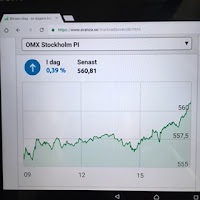
The graph shows the broad Swedish stock market index OMXS PI on April 7th, the day of a hideous and cowardly terror attack in the centre of Stockholm that killed and wounded dozens of random innocent friday shoppers/commuters. The police was informed about the attack at 14.53 and after that the Swedish stock market was open for roughly two hours (see Picture). All public transpot in Stockholm (including the metro and buses) was closed down during these two hours and at 16.30 there were at least three confirmed deaths due to the “alleged” terror attack. Meanwhile the stock market reacted in the way shown in the attached picture! Except for one little blip the market steadily climbed throughout the turmoil. And it seems the market started climbing at 14.50, exactly when the attack seems to have taken place! From the graph it seems that the market went up some 0.8% during the two hours the market remained open. Of course, this could just be random noise, and maybe the market had gone up e...

Venezuela: povertá e miseria straordinario!

Gambar
Dagens Industri skrev igår att den reala löneutvecklingen i Venezuela 2016-2017 väntas bli deppiga -373.9%! ”I Venezuela är läget betydligt värre. Löneökningarna i reda pengar väntas bli hela 111 procent, men inflationen är samtidigt ofattbara 485 procent. Den reala löneutvecklingen blir således ytterst deppiga -373,9 procent.” D.v.s. Venezuelanernas kommer nästa år få betala för att jobba! Och de får betala nästan tre ggr så mkt 2017 som de tjänade under 2016! Che poveracci! Hur är det möjligt?? Finns det inga gränser för den Bolivariska revolutionen? Venezuelanerna kan dock andas ut. Detta är lyckligtvis siffror från fantasins värld! Idag har Dagens Industri ändrat siffrorna och helt korrekt angivit -63.9%. Det är den siffra man får om man antingen (i) använder sitt sunda förnuft och höftar lite eller (ii) använder formeln ovan. Man kan inte bara subtrahera bort inflationen från nominella ändringen om siffrorna är så stora som i Venezuela! Basta! PS. DI är inte ensamma. Tidningen Af...

The investor that predicts stock returns without even knowing it!

Gambar
What are investors’ current stock return expectations? That is a question commonly found in the financial press. Typically, the type of investor one has in mind is the stock market investor . Not commodity investors, property investors or other investors. That makes sense since zinc investors or apartment block investors have other things to think about than whether the typical publically listed stock will go up or down in the future. There is one other group of investors that actually care about the future valuation of public companies, however, and that is the credit market investor . Investors who buy corporate bonds (or credit default swaps) also care about the future wellbeing of the company. What’s more, these investors often take a long-term view of the company and its valuation. In the paper Stock Return Expectations in the Credit Market (which you can find here ) I suggest a way of extracting these investors’ expectations of future stock returns. To do this I compute long-te...

I have an Erdös# = 5 and an Einstein# = 7!

I only write about very important stuff on this blog! :) And here comes a particularly important entry. What’s your number? If you ever got that question it probably was about how many millions you need to retire or something. I doubt it was about your degrees of separation from Albert Einstein or from the famous Hungarian mathematician Paul Erdös in the context of research collaborators! Mathematicians love numbers, however, and they have come up with the so-called Erdös number. If someone called X co-authored work with Paul Erdös, then X has an Erdös number equal to one. If you co-authored with X you have an Erdös number equal to two etc. etc. Now, using the web site of the American Mathematical Society I found out that even though I am not a mathematician I actually have an Erdös number myself! And even better, I have an Einstein number as well!! Erdös wrote a lot of papers but Einstein did not. And Einstein died many decades before the more productive Erdös, so I would expect, ce...

Brexit!

Well, we had a night with record thunder storms here in southern Sweden but the biggest thunders were evidently saved for this morning when we were served BREXIT with our breakfast! A big disappointment for an anglophile like me personally, and for 48% of the British population! And for the financial markets (USD/SEK +39öre, Gold +56 $/Oz, Nikkei -8% and counting....). Let’s hope both the good things and the bad things that come out of this will turn out to be better than expected... It is not impossible! Scheisse!

Brexit?

Today it is June 23, 2016. And tonight we will know whether Britain stays in the EU or not.... Today, The Independent reports two different poll results where the first says 44% for Remain and 45% for Leave and the other one says 43% for Leave and 41% for Remain. Today, The Telegraph reports 51% for Remain and 49% for Leave. In other words, a close call! A most interesting day for all investors out there! My guess, however, is that many undecided voters will vote for the safer option and vote Remain! I also think media etc. are biased and thrive on polls being close to 50/50. Therefore, my bet is that Britain will stay in the EU! AND, PER DIO, I CERTAINLY HOPE SO!!!!!!!!!!

Blockchain – the New Kid on the Block?

Hands up everyone who thinks the blockchain is the new internet, the new finance disruptor, the new TCP/IP! Now, am I the only one with his hands in the air? Well, if so, even better! Then I can pick all the low-hanging fruit and you get the left-overs... OK, on a more serious note, of course, this is very early to start investing in firms focusing on blockchains. But, personally, I remember when I studied engineering in Berkeley in 1994 and followed a course on something I barely understood called The Internet. We used something called gopher to connect to something called the world wide web to read uninteresting things (texts only) on other computers in boring places like NASA and CERN. There were no browsers (Mosaic came the next year and Netscape after that) and few people even used email. I studied, got bored, studied, got confused and graduated.... Then, I went home to Sweden and no one knew what I was talking about when I mentioned internet, Arpanet etc. And, then, nothing! For ...

Emerging market stocks + currency mismatch

Gambar
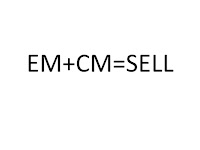
I am not too fond of the label ”Emerging Markets”, at least not in discussions about investment opportunities. I mean, what, exactly, is an emerging market? And which countries should count as emerging? Another thing that is often misused, or misunderstood, is buy/sell recommendations. Very often you hear someone recommending a buy or sell for this or that stock without adding a time horizon. I mean, isn’t it possible that a stock could be expected to fall more before it starts climbing? Yes, of course! Also emerging markets stocks…. I will come back to this particular issue in the last paragraph below. Anyway, this entry is not about these naïve observations. Instead, what I want to highlight is a rather unknown (I think) negative (sell) observation that is applicable, first and foremost, to emerging country stocks. As of lately, many emerging market currencies have weakened dramatically against particularly the US dollar. Whether we are talking about BRICS or MINTS or any other group...

Chinese News, English News and the Chinese Stock Market Crash

Gambar
In my research I am not only working on credit and credit risk but I also focus on financial stability, performance measures, commercial microfinance, and market behavior in general. I have also written academic papers on the use of news aggregators in finance. Considering the recent Chinese stock market correction, my latest paper on this topic turned out to be very timely! In the paper Byström (2014) “ Language, News and Volatility ” I use Google News to study the relation between news volumes in both English and Chinese and stock market volatilities in China and elsewhere. In collect more than nine million stock market-related news stories in English and (Mandarin) Chinese and find that the stock market volatility and the number of publicly available global news stories are strongly linked to each other both in English- and Chinese language. The relationship between news and volatility is weakest in mainland China, however, and a possible reason for this is that Chinese retail inv...

Insta Fashion

Gambar
Some weeks ago I attended an interesting conference at Lund University named “Shopping Asia”. Among all the topics that were discussed, there were some interesting presentations on Fast Fashion. Fast fashion is a term used to express that designs move from catwalk to consumers very quickly in order to fully capture current fashion trends, enabling mainstream consumers to buy current clothing styles at a really low price. H&M, Zara, Forever21 are examples of company names that are associated with fast fashion. One thought that I got when listening to the talks was that there seems to be an ongoing race towards the bottom! A race that takes us from Fast Fashion to Insta Fashion (my term for really cheap clothes that the Instagram generation buys for Saturday night). It is like a second wave of fast fashion , where the journey from drawing board to shop floor is a day or two instead of several weeks. What would the implication of such a second wave of fast fashion be for the environ...

Kreditmarknadens åsikt om volatiliteten på aktiemarknaden

Gambar
Ett nytt ” Byströms Börstips ” titulerat Kreditmarknadens åsikt om volatiliteten på aktiemarknaden har publicerats i LINC MAGAZINE #7 2014 s.36-37. Börstipset kan hittas här och handlar om hur man kan prediktera aktievolatiliteter över längre tidsrymder. Detta kan vara användbart om man t.ex. vill veta vad sina personaloptioner som löper ut om 10 år egentligen är värda idag. I en sådan situation är historiska volatiliteter inte särskilt användbara samtidigt som implicita aktievolatiliteter från optioner med flera års löptid typiskt saknas. Börstipset bygger på min artikel Stock Prices and Stock Return Volatilities Implied by the Credit Market där jag föreslår att man i stället för att förlita sig till aktiederivatmarknaden vänder sig till kreditderivatmarknaden . Ett typiskt företag är ju finansierat dels med aktiekapital och dels med lån (krediter). Detta gör att såväl aktieinvesterare som långivare har goda skäl att noga övervaka och analysera företagets verksamhet. Och det, i sin t...

Is the stock market really overheated?

Gambar
As of lately I have got numerous questions from friends, colleagues and students as to whether I think the stock market rally is getting close to an end. The arguments are always the same: S&P is at its all-time-high, stocks all over the world have been lifted by ultra-low monetary policy, company earnings are declining and geo-political concerns abound. In addition, many commentators and “experts” in the media, not only the perma-bear journalists of mainstream business news but also various seasoned investors, claim to be concerned. I would like to make one small contribution to this discussion. Particularly since I am sometimes, mistakenly, taken to be a local Dr Doom. It can be summarized in one short sentence: measured in the only hard currency there is, gold, S&P500 is neither cheap nor expensive at this point! Look at the two attached graphs. The first graph shows gold and S&P500 from 1968 until today, measured in US dollars. And the second graph shows S&P500 meas...

Kakao – på börsen!

Gambar
För många år sedan intervjuades jag i studenttidningen Nådiga Lundtan ”Chokladkonnässör med känsla för ekonomi” och i intervjun nämnde jag att jag kunde tänka mig att köpa en kakaoplantage någonstans i Afrika eller Sydamerika i framtiden. Någon sådan har det inte blivit men tanken, och kakaosuget, finns fortfarande kvar! Därför är det för mig intressant att läsa att den första börsintroduktionen av en kakaoplantage står för dörren. United Cacao planerar att börsintroduceras på AIM, Londonbörsens småbolagslista i december. Information kan hittas här och en sammanfattning av verksamheten följer här: Description of business: United Cacao Limited SEZC is the holding company for Cacao del Peru Norte SAC, the Company's wholly owned Peruvian operating subsidiary, which owns approximately 3,523 hectares of freehold agriculture land near the city of Iquitos, the state capital of Loreto, Peru's northern region. The Group's business is centred around the cultivation of cacao, one ...

The third edition of my book!

Since a couple of months, my book Finance - Markets, Instruments and Investments is available in a new (third) edition.

Trevlig konferens i trevligt Sydkorea!

Gambar
Har precis kommit hem från en derivat-konferens i Busan, Sydkorea. Det var mkt intressant. Bl.a. var jag opponent på ett papper av Ho & Lee (ni vet, från Ho-Lee modellen), det händer inte varje dag, och sedan vann jag Second-Best Paper Award för mitt papper om Credit-Implied Stock Volatilities! Och sedan var där en hel del andra intressanta papper om derivat. Det var också intressant att titta lite närmre på det sydkoreanska undret! Jag blev mäkta imponerad! Busan är Koreas andrastad och där bor runt tre miljoner människor. Överlag var Sydkorea mer modernt än jag hade väntat mig. Det var t.ex. mer likt Japan än Kina. Av någon anledning såg jag mest unga människor, kanske är den demografiska profilen annorlunda än t.ex. Sverige eller Kina? Konferensen var på ett hotell vid en strand (Haeundae Beach, se foto) och åtminstone där var nästan alla mycket moderiktigt klädda (tror jag….) med grälla färger, asessoarer, hattar och höga klackar (på strandpromenaden….). Som tagna ur PSYs Gang...

1%-klubben (bostäder)

Den senaste tiden har det i media diskuterats mycket om ojämnt fördelade förmögenheter och inkomster i olika länder. Mina två senaste blogginlägg har också fokuserat på denna fråga och huvudskälet till detta är att inkomstfördelning påverkar konsumtion som påverkar såväl företags försäljning och aktiepriser som länders bytesbalans och växelkurser och räntor . Med andra ord tror jag fördelningen av hushållens köpkraft är av stort intresse för den som är aktiv på finansmarknaden. Jag har funderat en del på fastighetspriser och deras kraftiga uppgångs effekt på fördelningen av köpkraft över landet och över generationerna. Inte minst är det intressant att studera vad det har för effekt på förmögenhetsöverföringen mellan generationer. Som ett första steg tänkte jag i detta inlägg visa hur rika de allra rikaste i Sverige, i bostadsmening, är. Idén till detta fick jag då jag häromdagen läste att du för att kvala in som ägare till ett av de 1% dyraste husen i San Fransisco måste punga ut med 3...

An (un)friendly tax!

I wrote a short (ironic) piece in Financial Times last week that has attracted some attention. It was titled (by Financial Times) “Tax the socially wealthy, too!” You can find it here . From the title it is easy to draw the conclusion that I advocate more taxes. In fact, this is far from the truth. Instead, the letter was an ironic critique against the taxation of wealth, regardless of the shape of this wealth (i.e. savings, stocks, houses, social capital, human capital and so on). What I try to do in my Financial Times letter is to give an illustrative example demonstrating the problems with wealth taxation. I suggest a way for social capital to be treated just like other forms of capital, and how those with a lot of social capital could give some of this capital (N.B. not money but social capital) to those who are poor in social capital. I exemplify this using Facebook since those with many Facebook friends probably have more social capital than those with fewer friends. In other wor...

Capital is Back!

In an interesting paper titled “ Capital is back: wealth-income ratios in rich countries 1700-2010 ” Piketty and Zucman (2013) show how wealth-to-income ratios in rich countries have come back to the levels seen in the eighteenth and nineteenth century. Between now and then, i.e. in the post-war period, the wealth-to-income levels were much lower. Today, the ratios in countries such as US, UK, France and Germany are around 400-600%, which is similar to the ratios from 1700 to 1900, while in 1970 the ratios were closer to 200-300%! I.e., there is a clear U-shape in the wealth-to-income ratios in all these countries. The U is most extreme in Italy (250% in 1970 and 650% today) and least extreme in Germany (200% in 1970 and 400% today) and in the US (300% in 1970 and 500% today). Interestingly, Piketty and Zucman (2013) argue that the low post-war ratios, particularly in Europe, appear to be a historical anomaly . They argue, and I cannot but agree, that the special circumstances of mass...

Ska man köpa aktier i folktomma länder?

Ett nytt ” Byströms Börstips ” har publicerats i LINC MAGAZINE #5 2013 s.60-61. Börstipset kan hittas här och handlar om huruvida börsen går bättre i länder med mindre folk. Kanske en lite konstig fråga att ställa sig, eller? Jo, kanske det. Inte minst som jag inte känner till ngn teori som skulle kunna styrka antagandet att folktäthet skulle kunna vara kopplad till börsutvecklingen. Dock, avsaknad av teori innebär ju inte alltid avsaknad av empirisk evidens: ljusets böjdes t.ex. lika mkt vid dess passage kring himlakroppar innan Einstein kom ut med sin allmänna relativitetsteori 1916 som efter….. Dessutom, det är ju inte förbjudet att undersöka saker av denna typ bara för att en välgrundad bakomliggande teori saknas. Hur som helst, min korta och ganska ad hoc mässiga studie visar trots allt tydligt att om historien kan användas som kristallkula, så ska du köpa aktier i länder där folk inte trängs med varandra! Som figuren visar har en likaviktad portfölj med aktier från de folktomma ...